
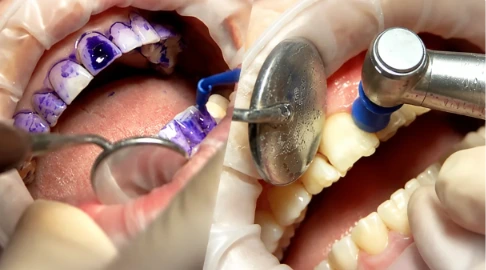
You may have wondered the same thing: “Why do I need professional dental hygiene if I brush twice a day? Isn’t an ordinary toothbrush and toothpaste enough?”
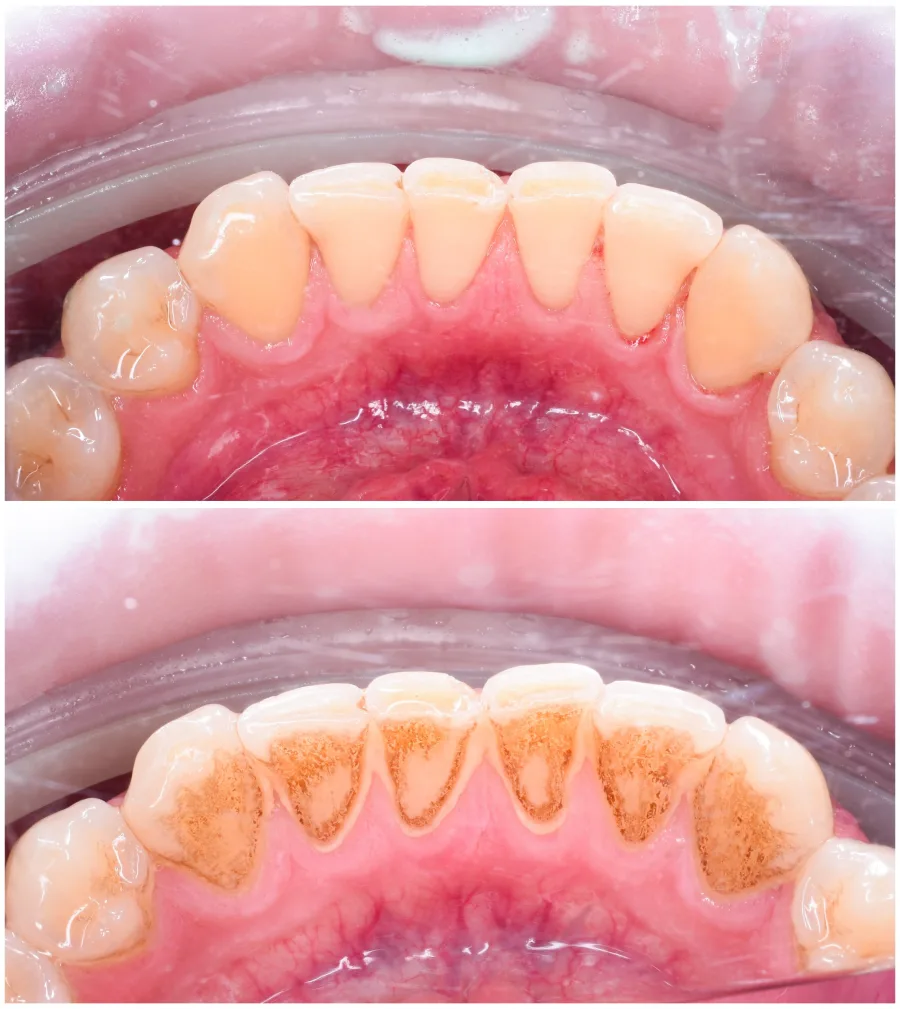
Daily care at home is the foundation of healthy teeth and gums, yet even the most thorough brushing cannot fully remove calculus and plaque from hard-to-reach places. That is the job of a dental hygienist. During the visit, the specialist pays particular attention to the spaces between teeth, the area along the gum line, and to crowns, implants and braces — this is where plaque builds up fastest and goes unnoticed longest. The hygienist also assesses how effective your home care is and recommends the products that suit you best.
What does a dental hygienist do during the visit?
Professional dental hygiene is a set of procedures carried out in several stages:
- Ultrasonic cleaning — gentle removal of hardened calculus.
- AIR FLOW procedure — removal of soft plaque and staining (from coffee, tea or smoking, for example) with a jet of compressed air, water and fine powder. The method is well suited to keeping teeth clean on a regular basis.
- Polishing — smoothing the enamel surface with a special paste so that new plaque builds up more slowly.
- Home care advice — choosing the right products for you and explaining the correct brushing technique.
If there is a medical reason for it, the specialist may additionally apply fluoride or remineralise the enamel. These procedures help strengthen the enamel and reduce sensitivity, but they are not a compulsory part of every visit.
Is the procedure safe for tooth enamel?
Yes, professional hygiene is completely safe. The hygienist adjusts the instrument tips, the type of powder and the intensity of the jet to your sensitivity and to any crowns, implants or braces you have. An ultrasonic scaler helps detach mineralised deposits, while AIR FLOW removes soft plaque and staining without damaging the enamel. Polishing does not “wear the tooth down” either — the professional paste gently removes the remaining plaque and leaves the surface smooth.
Can an old filling fall out or a crown come off during cleaning?
A hygiene procedure does no harm to a properly placed, well-sealed filling or crown. If a filling or crown does shift or come away during the procedure, it means the restoration had already lost its seal, secondary decay had started underneath it, or the cement had worn out — the calculus was simply holding it in place. In that situation, hygiene actually helps to catch a hidden problem in time, before it causes pain or more serious damage to the tooth.
Book a visit with dental hygienist Agnese Fjodorova and take care of your smile today — make an appointment.