Children's Orthodontics in Riga: Jaw Expansion & Early Bite Correction
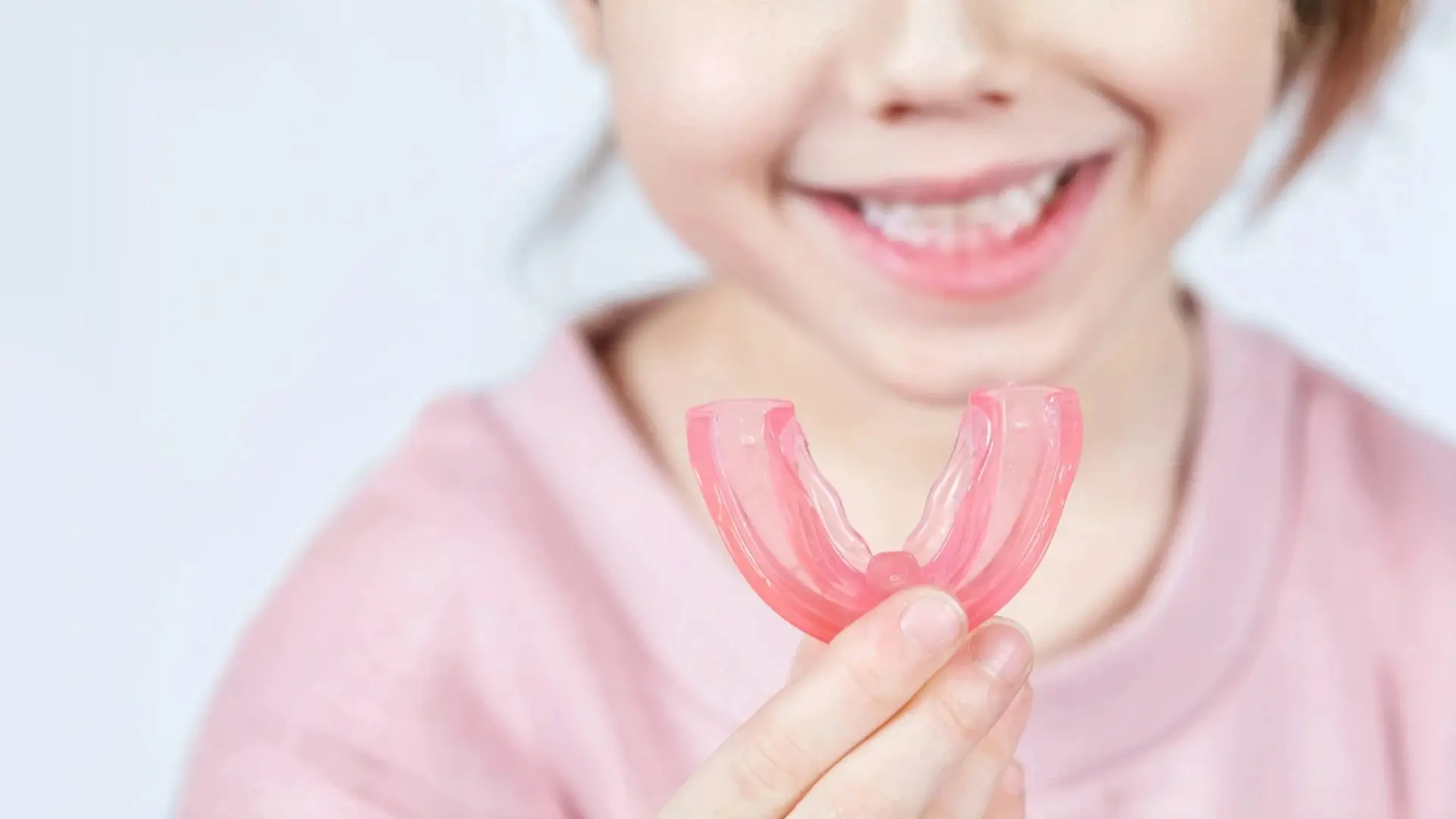
Myofunctional Trainers (for children aged 4+):
Myofunctional therapy for soft tissue imbalance (cheeks, lips, tongue).
Functions: Correct mild crowding, develop proper oral habits, and serve as excellent pre-orthodontic preparation. Used for early orthodontic treatment in children; for adults, used as a retention aligner post-treatment.
Removable Expansion Appliances:
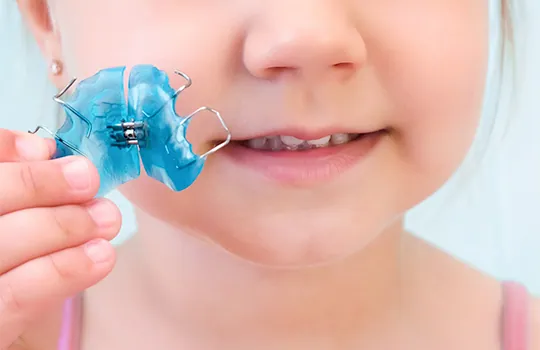
Used to correct bite and expand the jaw during the mixed dentition phase.
Application: Initial treatment stages and result stabilization. Correction of mild posterior crossbite and protrusion of upper front teeth (e.g., due to thumb sucking).
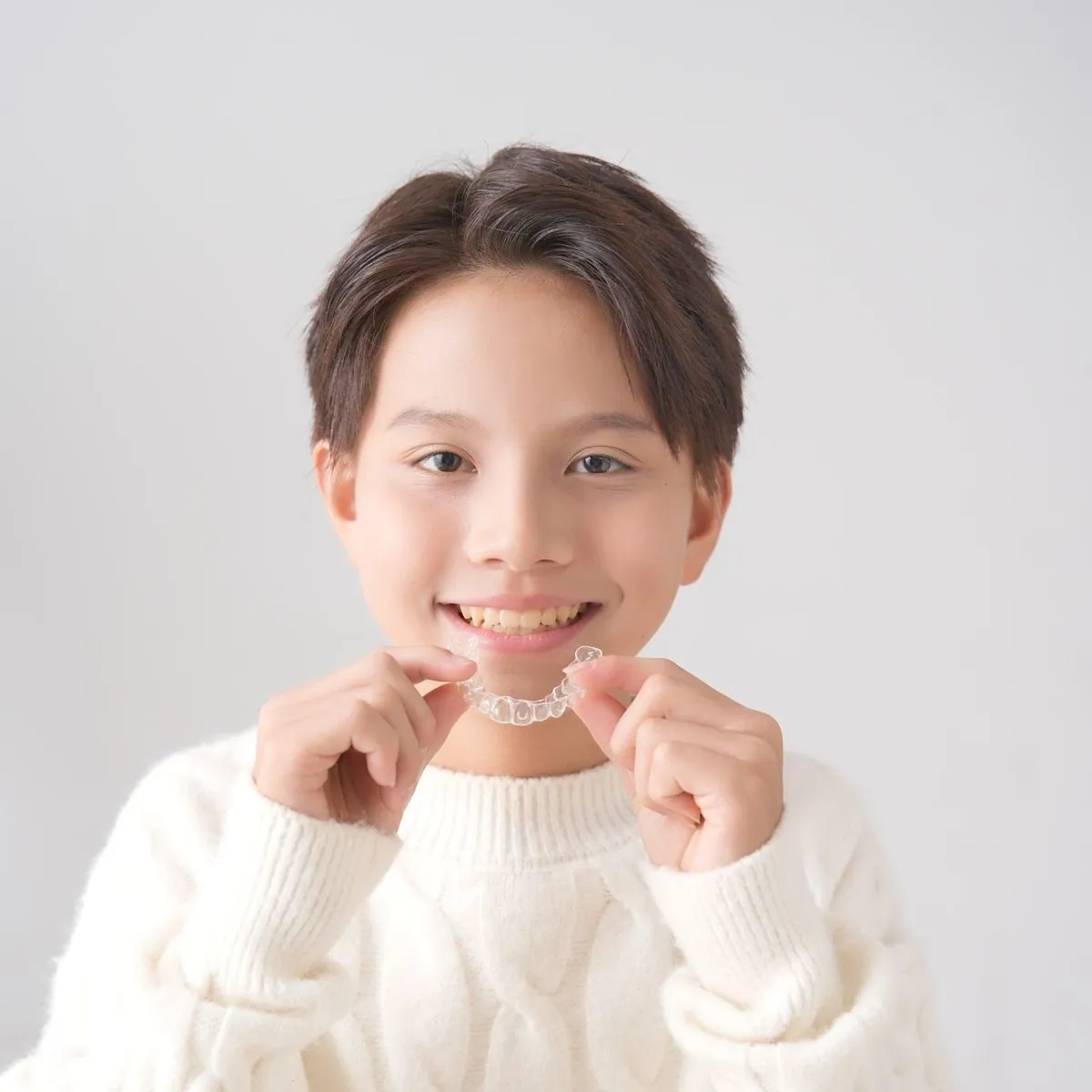
Clear Aligners for Children:
• For dental arch expansion.
• For bite correction.
• For space maintenance if a primary tooth is lost prematurely.
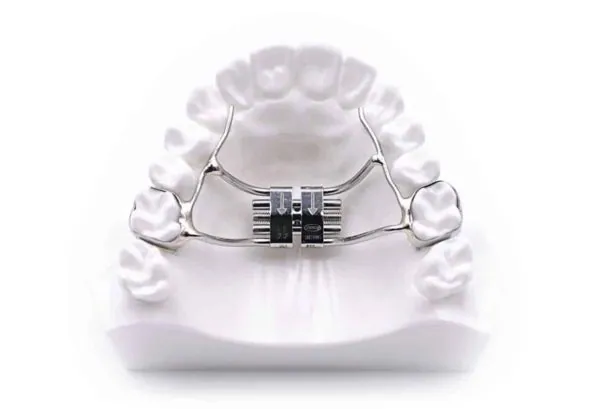
Fixed Expansion Appliances:
For patients requiring both dental and skeletal expansion. Often combined with a face mask.
Indication: Class III malocclusion (maxillary deficiency), severe dental crowding, or when patient compliance is a concern.
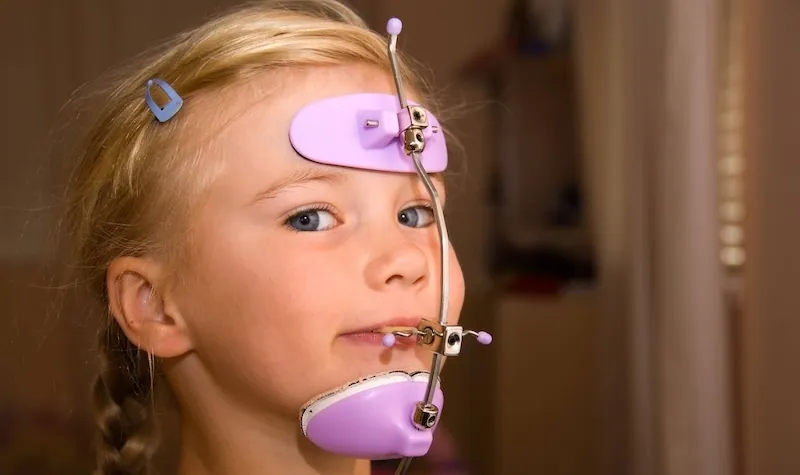
Functional Appliances for Growth Modification (removable and fixed):
Used to guide jaw growth during puberty, particularly for stimulating mandibular development.
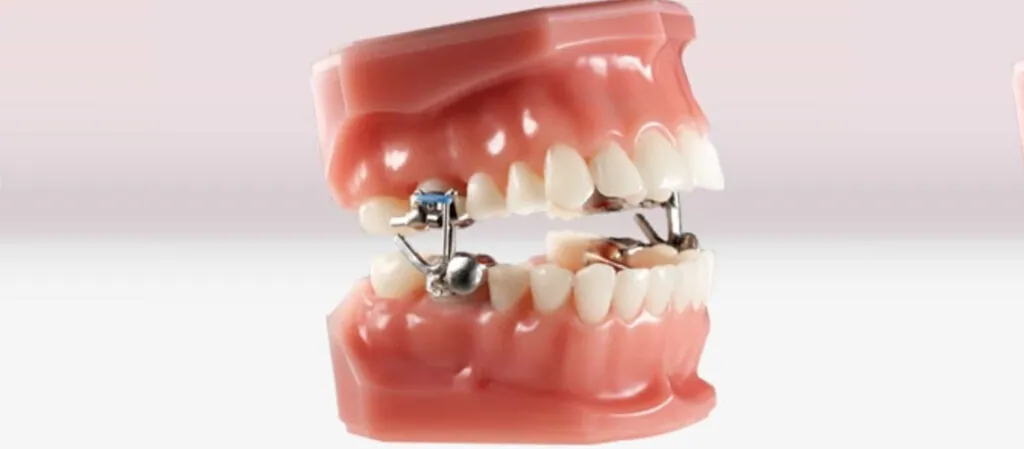
MARA (Mandibular Advancement Repositioning Appliance)
This is a fixed orthodontic appliance used to correct a Class II malocclusion (when the lower jaw is positioned too far back relative to the upper jaw).
Frequently asked questions
-
How to tell if your child has a malocclusion (misaligned bite)?
Some signs are obvious—teeth overlap, there are large gaps, or teeth grow crookedly. However, many bite problems are not visible to parents. You should pay attention if your child breathes through their mouth, sucks their thumb or a pacifier after age 3–4, chews only on one side, or regularly complains of jaw pain. The safest way is an orthodontic consultation—recommended as early as age 6–7, when permanent teeth begin to come in. Early diagnosis allows the problem to be caught while it is still easily correctable.
-
How much does a pediatric orthodontic plate cost in Riga?
The price for pediatric orthodontic appliances at the We Care clinic starts from €200 and depends on the type of appliance and the complexity of the treatment. A simpler removable plate costs differently than a functional device for jaw growth correction. Before any appliance is fitted, orthodontic diagnostics are required, including tooth scanning, X-rays, and the creation of an individual treatment plan. The exact price can only be determined after a consultation.
-
Why is jaw expansion necessary?
Jaw expansion is a procedure used when a child's jaw is too narrow and there isn't enough room for the teeth. Due to the narrowness, teeth grow crowded, crooked, or even in two rows. Expansion is most effective in childhood and adolescence while the jaw is still growing—then the process is simpler and the result is more stable. Depending on the situation, removable or fixed expansion appliances are used. Timely jaw expansion often reduces or even eliminates the need for braces later in life.
-
What is the difference between a dental plate and braces for children?
A dental plate and braces are two different treatment stages, not alternatives. Plates are typically used at an early age—while the jaw is still growing—to correct jaw development, create space for teeth, and eliminate bad habits. They are removable, so the child can take them out while eating and brushing their teeth. Braces, on the other hand, are used at a later age when all permanent teeth have erupted, and their task is to precisely position each tooth. Often, a plate is the first step that prepares the jaw for more effective treatment with braces or aligners in the future.
- 32k + visits
- 3500 + prosthetics
- 1000 + implantations
- 96% of patients return to us