
Teeth straightening with modern braces in Riga — We Care
Ceramic Braces: Maximum Aesthetics During Treatment
BRACES
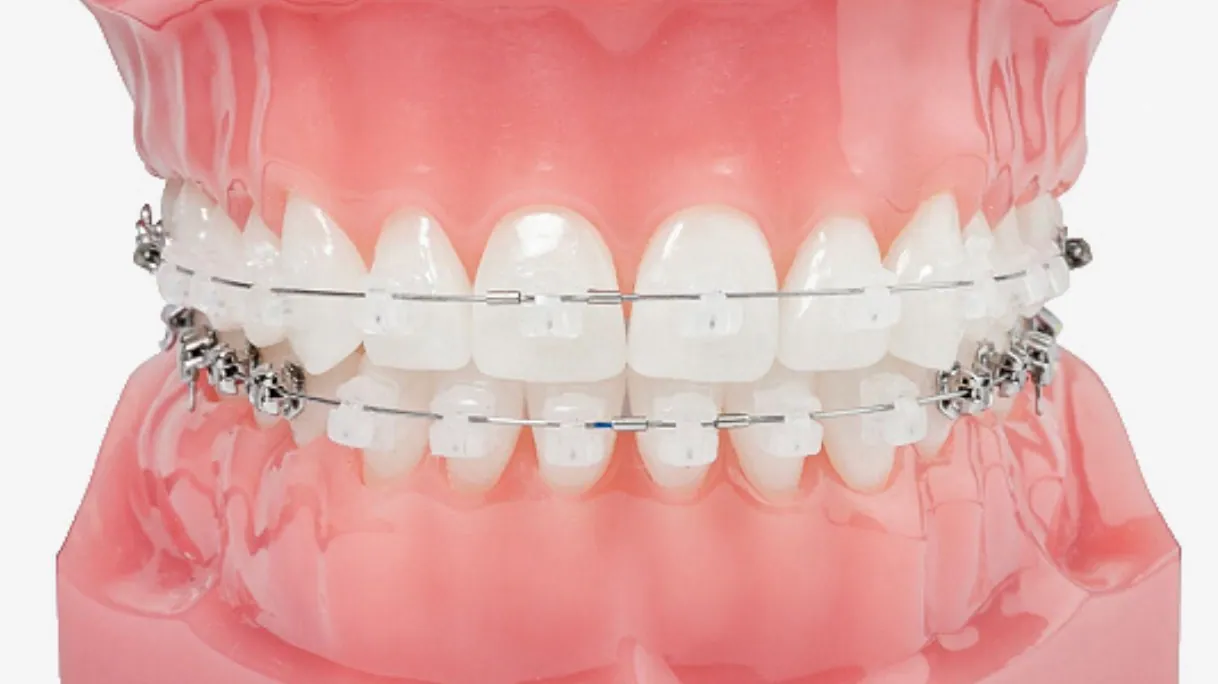
Ceramic braces are high-aesthetic orthodontic appliances. They are virtually invisible on the teeth, allowing for effective bite and alignment correction without compromising your ability to smile openly.
What materials are used in ceramic braces?
Ceramic braces are made from polycrystalline aluminum oxide—a light, translucent material that is highly durable and has a smooth surface similar to tooth enamel. This feature, combined with the ability to match the material's shade to your teeth, makes the braces nearly unnoticeable. To enhance the aesthetic effect, a special light-colored coating can also be applied to the steel archwire.
The wire is secured with elastic rings or wire ties.
A specialized clip system holds the wire, often requiring fewer adjustment visits.
Ligating Braces
Self-Ligating Braces
Types of braces
Durability:
8/10
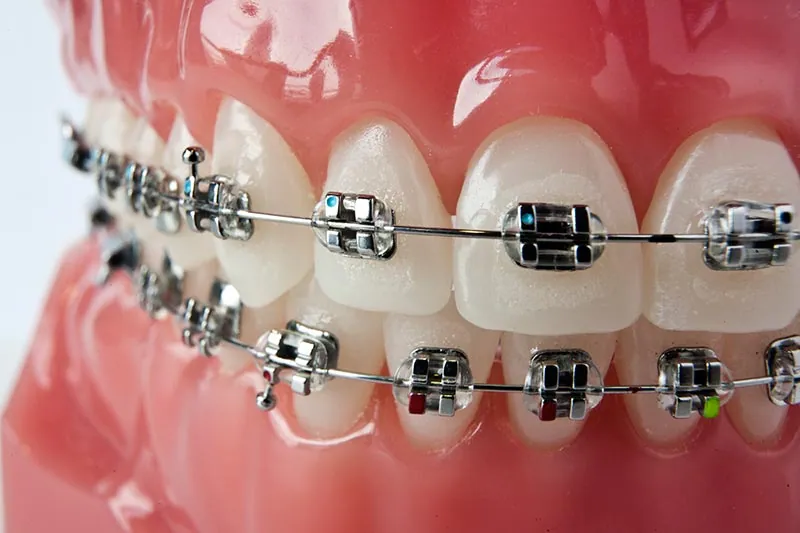
The most common type among all bracket systems. All components are manufactured from specialized dental alloys.
5/10
Comfort:
High
Metal Braces
Aesthetics:
Durability:
8/10
8/10
Comfort:
Medium
Discreet, aesthetic appliances are made of high-strength ceramic that absorbs rather than reflects light.
Ceramic Braces
Aesthetics:
Metal Braces: Time-Tested Reliability
Despite the emergence of many new orthodontic devices, metal braces remain a reliable tool for correcting bites and resolving complex dental-facial pathologies.
Effectiveness
Metal braces are the most common orthodontic appliances for teeth alignment worldwide. The systems consist of brackets attached to each individual tooth and an orthodontic archwire connecting them. All these components are made from specialized dental, medical, or hypoallergenic alloys.
Their lower aesthetic appeal is fully compensated by their effectiveness. Metal braces are particularly capable of solving complex clinical cases. Furthermore, they are the most affordable type of orthodontic system. They cost 20%–30% less than ceramic or sapphire braces and are half the price of clear aligners.
Stages of orthodontic treatment at We Care clinic
Diagnostics and creation of an individual treatment plan
Installation of braces and regular visits
Prices and payment options
Interest-free installments and payment in parts
Frequently asked questions:
Although metal systems are noticeable on the teeth, orthodontists often recommend them. They are the most reliable and fastest tool for creating a perfect smile.
✅ Advantages (Pros)
✅ Advantages (Pros)
- Maximum durability: Metal is virtually impossible to break. Unlike ceramics, these brackets do not chip and can withstand high loads.
- Shortest treatment time: Due to minimal friction between the archwire and the bracket slot, teeth move into the desired position faster than with ceramic systems.
- Affordability: Classic (vestibular) metal braces are the most budget-friendly way to correct a bite.
- No coffee stains: Metal is not stained by food dyes. You can safely drink tea, coffee, or eat berries without worrying about the system darkening.
- Visibility: Braces are visible when smiling and talking. However, this can be turned into a style by using colorful elastic ligatures.
- Adaptation period: During the first 1–4 weeks, metal elements may irritate the mucosa. After the adaptation period, the discomfort disappears completely.
- Enamel bonding: Since brackets are attached to the enamel, performing aesthetic dental restorations requires more time and preparation than when using aligners.
The installation of braces is a meticulous procedure performed by orthodontists. Depending on the complexity and the number of teeth involved, the bonding process takes about 1 hour.
First, the doctor treats the surface of the teeth where the system components will be attached. In the second stage, the brackets are bonded to the tooth enamel. Finally, the specialist installs the orthodontic archwire.
Throughout the treatment period, you must avoid hard foods such as nuts and crackers, sticky foods, and very hot or cold drinks. Foods with aggressive dyes and carbonated drinks are also prohibited.
First, the doctor treats the surface of the teeth where the system components will be attached. In the second stage, the brackets are bonded to the tooth enamel. Finally, the specialist installs the orthodontic archwire.
Throughout the treatment period, you must avoid hard foods such as nuts and crackers, sticky foods, and very hot or cold drinks. Foods with aggressive dyes and carbonated drinks are also prohibited.
Installing braces is a team effort between the doctor and the patient. To ensure successful treatment and keep the teeth under the system healthy, preparation includes three key stages:
1. Diagnostics and Treatment Plan It all begins with an initial consultation. The orthodontist performs an examination, takes the necessary X-rays, and creates a detailed correction plan, selecting the system that suits you best.
2. Full Oral Cavity Sanitize (Sanitation) Teeth must be in perfect condition before the braces are installed.
1. Diagnostics and Treatment Plan It all begins with an initial consultation. The orthodontist performs an examination, takes the necessary X-rays, and creates a detailed correction plan, selecting the system that suits you best.
2. Full Oral Cavity Sanitize (Sanitation) Teeth must be in perfect condition before the braces are installed.
- Caries Treatment: Even the smallest cavities must be addressed. Once braces are on, access to certain areas is restricted, which can trigger rapid infection. Treating teeth with braces already installed is more difficult and expensive.
- Gum Health: Braces create additional pressure. To avoid inflammation, it is crucial to treat periodontitis in advance.
- Why it’s necessary: The adhesive (cement) bonds securely only to perfectly clean enamel. This requires a professional cleaning by a dental hygienist.
- When to do it: It is recommended to have the cleaning done a few days before installation so the gums have time to fully recover and "calm down."
- Important to know: Professional hygiene is also necessary throughout the treatment (at least 2–3 times a year). This is the best prevention against caries while wearing braces.
The result of orthodontic treatment depends not only on the doctor but also on your discipline. To ensure your teeth are both straight and healthy after the braces are removed, follow these rules:
🪥 Daily Hygiene
🪥 Daily Hygiene
- Brushing after every meal: This is the golden rule. If you cannot brush, be sure to use a mouthwash.
- Special toolkit: A regular toothbrush is not enough. Use: An orthodontic brush (with a V-shaped trim); interdental brushes to clean the space under the archwire; and Superfloss (special dental floss) to clean between the teeth.
- Morning check: Check the integrity of the system every day. If a bracket is loose or the wire has popped out, schedule an appointment with your doctor immediately.
- Stick to the schedule: Do not miss planned visits. The doctor not only changes the archwires but also monitors the condition of your enamel.
- Professional cleaning (Air Flow): Plaque accumulates faster when wearing braces. We recommend undergoing the Air Flow procedure at the clinic every 3–4 months.
- How it works: Using a special indicator, the doctor locates hidden plaque and gently removes it with a pressurized stream of sodium bicarbonate solution. This is safe for the braces and effective for the enamel.
- Exclude hard foods: Nuts, crackers, hard apples (it is better to cut them into slices).
- Exclude sticky foods: Toffee, chewing gum, nougat.
- Protect the color: If you have aesthetic braces, limit staining drinks (strong tea, wine).
Although metal systems are noticeable on the teeth, orthodontists often recommend them. They are the most reliable and fastest tool for creating a perfect smile.
✅ Advantages (Pros)
✅ Advantages (Pros)
- Maximum durability: Metal is virtually impossible to break. Unlike ceramics, these brackets do not chip and can withstand high loads.
- Shortest treatment time: Due to minimal friction between the archwire and the bracket slot, teeth move into the desired position faster than with ceramic systems.
- Affordability: Classic (vestibular) metal braces are the most budget-friendly way to correct a bite.
- No coffee stains: Metal is not stained by food dyes. You can safely drink tea, coffee, or eat berries without worrying about the system darkening.
- Visibility: Braces are visible when smiling and talking. However, this can be turned into a style by using colorful elastic ligatures.
- Adaptation period: During the first 1–4 weeks, metal elements may irritate the mucosa. After the adaptation period, the discomfort disappears completely.
- Enamel bonding: Since brackets are attached to the enamel, performing aesthetic dental restorations requires more time and preparation than when using aligners.
The installation of braces is a meticulous procedure performed by orthodontists. Depending on the complexity and the number of teeth involved, the bonding process takes about 1 hour.
First, the doctor treats the surface of the teeth where the system components will be attached. In the second stage, the brackets are bonded to the tooth enamel. Finally, the specialist installs the orthodontic archwire.
- Throughout the treatment period, you must avoid hard foods such as nuts and crackers, sticky foods, and very hot or cold drinks. Foods with aggressive dyes and carbonated drinks are also prohibited.
Installing braces is a team effort between the doctor and the patient. To ensure successful treatment and keep the teeth under the system healthy, preparation includes three key stages:
1. Diagnostics and Treatment Plan It all begins with an initial consultation. The orthodontist performs an examination, takes the necessary X-rays, and creates a detailed correction plan, selecting the system that suits you best.
2. Full Oral Cavity Sanitize (Sanitation) Teeth must be in perfect condition before the braces are installed.
1. Diagnostics and Treatment Plan It all begins with an initial consultation. The orthodontist performs an examination, takes the necessary X-rays, and creates a detailed correction plan, selecting the system that suits you best.
2. Full Oral Cavity Sanitize (Sanitation) Teeth must be in perfect condition before the braces are installed.
- Caries Treatment: Even the smallest cavities must be addressed. Once braces are on, access to certain areas is restricted, which can trigger rapid infection. Treating teeth with braces already installed is more difficult and expensive.
- Gum Health: Braces create additional pressure. To avoid inflammation, it is crucial to treat periodontitis in advance.
- Why it’s necessary: The adhesive (cement) bonds securely only to perfectly clean enamel. This requires a professional cleaning by a dental hygienist.
- When to do it: It is recommended to have the cleaning done a few days before installation so the gums have time to fully recover and "calm down."
- Important to know: Professional hygiene is also necessary throughout the treatment (at least 2–3 times a year). This is the best prevention against caries while wearing braces.
The result of orthodontic treatment depends not only on the doctor but also on your discipline. To ensure your teeth are both straight and healthy after the braces are removed, follow these rules:
🪥 Daily Hygiene
🪥 Daily Hygiene
- Brushing after every meal: This is the golden rule. If you cannot brush, be sure to use a mouthwash.
- Special toolkit: A regular toothbrush is not enough. Use: An orthodontic brush (with a V-shaped trim); interdental brushes to clean the space under the archwire; and Superfloss (special dental floss) to clean between the teeth.
- Morning check: Check the integrity of the system every day. If a bracket is loose or the wire has popped out, schedule an appointment with your doctor immediately.
- Stick to the schedule: Do not miss planned visits. The doctor not only changes the archwires but also monitors the condition of your enamel.
- Professional cleaning (Air Flow): Plaque accumulates faster when wearing braces. We recommend undergoing the Air Flow procedure at the clinic every 3–4 months.
- How it works: Using a special indicator, the doctor locates hidden plaque and gently removes it with a pressurized stream of sodium bicarbonate solution. This is safe for the braces and effective for the enamel.
- Exclude hard foods: Nuts, crackers, hard apples (it is better to cut them into slices).
- Exclude sticky foods: Toffee, chewing gum, nougat.
- Protect the color: If you have aesthetic braces, limit staining drinks (strong tea, wine).
- 32k + visits
- 3500 + prosthetics
- 1000 + implantations
- 96% of patients return to us